Author name
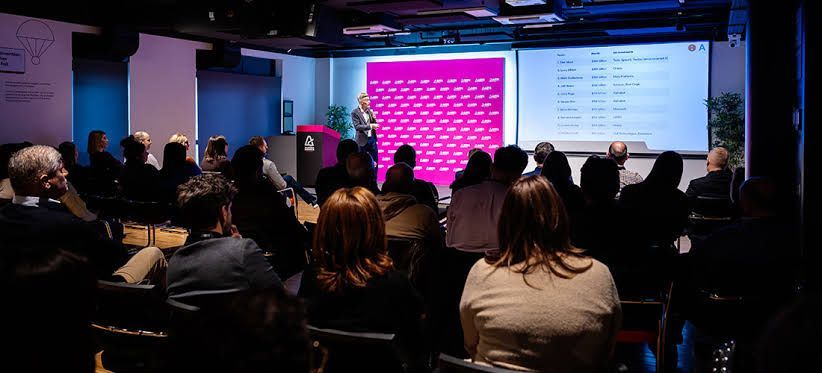
BledCom is an annual gathering of scholars and practitioners in public relations and related disciplines to discuss contemporary communication and management problems. Organized annually since 1994, it is the oldest conference in our field that is not affiliated with a professional or academic association.
So far, eight books and nine special issues or sections of peer-reviewed journals have been published based on previous symposia (www.bledcom.com.). We attribute this success to the hundreds of colleagues who have participated over these years and of course our sponsors. We thank you all for sustaining this boutique conference for a quarter of a century.
31st International Public Relations Symposium BledCom
July 5-6, 2024
CALL FOR PAPERS
Conference Dates and Venue:
The 31st International Public Relations Research Symposium (BledCom 2023) will be held on July 5 - 6, 2024, in Rikli Balance Hotel, Lake Bled, Slovenia.
Theme: Public Relations and Human Well-being
Scholarship has almost singularly focused on how public relations can contribute to organizational effectiveness – through multiple dimensions. As a result, the focus has also been skewed almost entirely to mass-mediated communication ignoring intra and inter-personal communication. We believe it is vital for our field to reflect on individuals and human well-being as all collectivities are made up of individuals. Individuals who harbor positive emotions, are content, and happy are more likely to be productive and effective organizational members contributing to organizational effectiveness and success. On the other hand, individuals who harbor negative emotions (depression, anger, stress and anxiety) are more likely to be poor contributors to organizational effectiveness and success and may actually do harm to organizational reputation. Individual well-being, then, can yield many desirable outcomes such as healthier relationshps, pro-social behaviors, greater productivity at work, increased creativity, etc.
When viewed from the prism of human well-being, our definition of, and orientation to, publics will invariably become broader and more holistic than it has been for almost five decades of public relations scholarship. A more holistic view of audiences will also include the well-being of the underprivileged and vulnerable groups of a society such as children, migrants, minority groups, and those disadvantaged economically and socially. For these and many similar reasons, mindfulness as a strategy for well-being has received a lot of attention lately helped by initiatives such as the International Day of Yoga suggested by Indian Prime Minister Narendra Modi and adopted by the United Nations in 2014.
This theme certainly has the potential to broaden the horizons of our field and thus contribute to better its reputation as well. The theme can be addressed from a variety of perspectives and lends itself to multi-disciplinarity as well such as:
- How can we link public relations and communication management to human well-being? What are some evidence-based contributions that public relations practitioners have made to individual and societal well-being?
- How has our field contributed to understanding the link between culture, social structures, and organizational/institutional and individual and societal well-being ?
- Is management concerned with human wellbeing, and how it uses communication for that purpose?
- How is internal communication and employee engagement affecting employee wellbeing and life satisfaction?
- Are there case studies, or other empirical research linking public relations with well-being during crises and challenging situation?
- Can we identify the contributions public relations and communication management has played in charting well-being in an era of increasing environmental challenges?
- How is rapid digital transformation, omnipresence of social media and the emergence of AI affecting human wellbeing?
- How is our field being asked to contribute to enhancing the popularity of some of the ‘tools’ of human well-being such as yoga, spirituality, and even religion?
- On the flip side, how is our field being used by those who prefer a more atheistic/agnostic approach to well-being?
- Is there evidence of the CSR – public relations nexus vis-à-vis human well-being?
- How does corporate, government and international governance affect human wellbeing and what is the role of public relations in that context?
Obviously these are just a few questions that can be posed but there are many other dimensions to this theme that we invite authors to explore as well. As always, all methodological perspectives are welcome given the broad nature of the theme.
Call for Abstracts and Panels:
We invite abstracts that are between 500 and 800 words (including title and keywords) with up to 5 references. Please note that as has been the norm in the past, BledCom welcomes ALL papers that are relevant to public relations and communication management and not just papers that discuss the conference theme. We also welcome panel proposals.
Please use the following guidelines to present your abstract and kindly supply the word count at the end of the submission.
Format for the Abstract:
Please note that the chances of your abstract being accepted are enhanced if you observe the following format in preparing it:
Introduction and purpose of the study (and research question if there is one) – helps summarize the purpose and rationale of your study. Literature review – Helps place your work in context with the existing body of knowledge. Methodology – Define the main method used for gathering data including sample size, and state the rationale for using this method. Results and conclusions – Helps summarize the answers to the research questions while also outlining the implications of the results. Also summarize the limitations of the study and offer suggestions for future research. Practical and social implications – Offer the potential implications both for practice and society. Also provide us with 3 to 5 keywords that highlight your study. Abstracts should come as blind copies without author names and affiliations, who are to be identified on on a separate cover page. Please use the suggested headings to structure the abstract. A list of literature is not necessary, but if it is provided it is included into the word count.
Panel proposal are also welcome. The proposal should describe the title and focus of the panel, name of the chair of the panel, and names of every member of the panel and title or focus of each presentation.
Deadline:
Paper abstracts and panel proposals should be submitted via email to bledcom@fdv.uni-lj.si no later than February 5, 2024. Decisions will be made by March 4, 2024 after peer review. Full papers not exceeding 6.000 words will be due by September 21, 2024 for inclusion in the conference proceedings.
Program Committee:
· Dejan Verčič, University of Ljubljana and Herman & partners, Slovenia
· Krishnamurthy Sriramesh, University of Colorado Boulder, USA
· Ana Tkalac Verčič, University of Zagreb, Croatia